跳至主要内容

Textile UV aging test box testing equipment

QINSUN Textile UV Aging Test Chamber UV intensity testing equipment can also be used for light resistance and light aging experiments of various colored textiles, leather, artificial leather, plastics, building materials, chemicals, electrical appliances and other materials. By setting parameters such as ultraviolet light intensity, temperature, condensation environment, and spraying in the test box, the simulated natural conditions required for the experiment are provided to test the color fastness of colored textiles and dyes to light and weather; automatic monitoring and compensation of light energy ; Temperature feedback control; blackboard temperature loop control and other multi-point adjustment functions. Conforms to US, European and international standards.
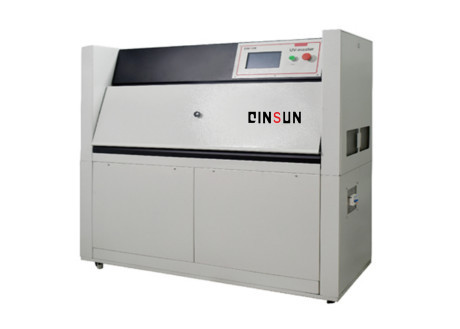


technical parameter:

1. Temperature range: RT 10℃~70℃

2. Temperature uniformity: ±2°C

3. Temperature fluctuation: ±0.5℃

4. The center distance of the lamp tube: 65-70MM

5. Lamp tube: L=500/40W, 6 pieces

6. The distance between the test product and the center of the lamp tube: 55MM

7. Effective irradiation area: 600*500*750MM

8. Ultraviolet wavelength: UVA range is 200-400nm

9. Test time: 0~999H (adjustable)

10. Temperature control method: PID self-tuning SSR control
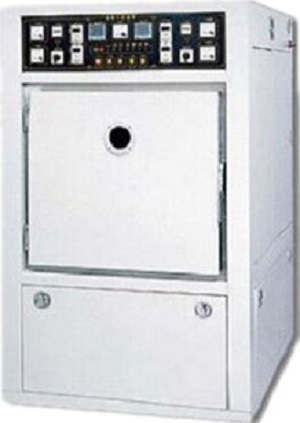


QINSUN Textile UV Aging Test Chamber UV intensity detection equipment control system:

1. The black aluminum plate is used to connect the temperature sensor, and the black plate temperature instrument is used to control the heating, so the temperature is more stable.

2. The radiometer probe is fixed and does not need to be loaded and unloaded each time.

3. The radiation amount adopts a special ultraviolet radiation meter with high precision display and measurement.

4. The irradiance is not more than 0.68W/m2.

5. Accessories: stainless steel sample holder: 48 pieces.

6. Temperature and humidity control method: balanced temperature and humidity control (BTHC).

7. Controller: Siemens touch screen program controller.

8. Irradiance control: UV-B ultraviolet radiation meter, (UV-A ultraviolet radiation meter is optional), can set and measure the intensity of ultraviolet radiation and calculate the cumulative value of radiation work through cumulative time.

9. Exposure methods: moisture condensation exposure, light radiation exposure.

10. Temperature controller: Intelligent digital display temperature controller is adopted, with high precision and stable control.

11. Time controller: It adopts programmable controller, and the light and condensation time can be automatically converted. The control time can be set arbitrarily within one thousand hours.

12. Water supply mode: automatic water supply and replenishment function.

13. Communication: Two-way connection (RS585 communication interface), friendly interface (optional).

14. Safety protection: Leakage circuit breaker for power supply, overload and short circuit alarm for control circuit, over temperature alarm, water shortage protection.


(11-16)

ps: (WLJCDM809)

https://www.qinsun-lab.com

评论

此博客中的热门博文

Tinuvin 1130: An Excellent UV Absorber

 In the field of the chemical industry, UV absorbers play a crucial role, particularly in protecting materials from UV damage. Today, we will delve into a highly regarded UV absorber—Tinuvin 1130. Tinuvin 1130 : chemical name: 3-(3-(2H-benzotriazole-2-yl)-4-hydroxy-5-tert-butyl phenyl)propionic acid polyethylene glycol 300 ester; CAS login number: 104810-48-2. This product is an exceptional UV absorber that offers numerous benefits due to its unique properties. One of the standout features of Tinuvin 1130 is its excellent weather resistance. It has a strong ability to absorb ultraviolet rays, particularly those with wavelengths ranging from 290-400nm. This effectively prevents coatings, plastics, rubber, and other materials from being damaged by UV rays, thereby maintaining the performance and appearance stability of these materials and extending their service life. In addition, Tinuvin 1130 exhibits good compatibility. It is easy to emulsify in water-based systems and can be...

Ink Abrasion Tester For Ink Layer Abrasion Test

        Abrasion resistance of ink layer is one important parameter that is used to evaluate the printing quality. If the abrasion resistance of the ink layer is poor, the printed words on the paper or paperboard may become illegible and the part with printed area may be abraded in transportation, storage or in use.                   As a result, the printed words will be not able to be read by the customers, which cause inconvenience or misunderstanding and thus the product image would be compromised. Therefore, it is necessary for the manufacturers to test the abrasion resistance of the ink layer on the paper or paperboard before use.         Often during the shipping or handling process, printed products will be exposed to a degree of abrasion to its surface. Regardless of quality or perfection of the printed product, a scuffed, rubbed off or scratched surface would render it a print defect...

Mechanism of action of benzonitrile

  Product identification: Product name:  Benzonitrile Molecular formula: C7H5N CAS No.100-47-0 Benzonitrile is a colorless oily liquid with an almond-like odor. It is slightly soluble in cold water, soluble in hot water, and easily soluble in organic solvents such as ethanol and ether. The mechanism of action of benzonitrile can be elaborated from the following aspects: I. Chemical Properties and Applications As an Intermediate in Organic Synthesis: Benzonitrile plays a crucial role in chemical synthesis as an intermediate for many important compounds and materials. For example, it can be used to synthesize advanced coatings such as phenyl melamine, as well as compounds such as pesticides, aliphatic amines, and benzoic acid. These compounds have a wide range of applications in agriculture, coatings, plastics, and other fields. As a Solvent: Benzonitrile possesses good solubilizing properties and can be used as a solvent. In organic synthesis, it is often used as a solvent to d...