跳至主要内容

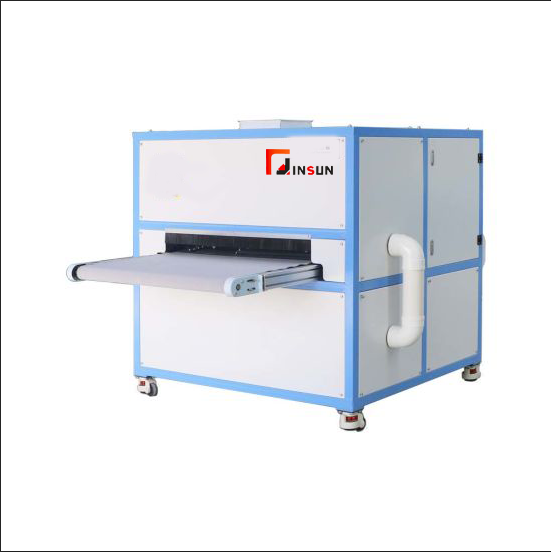
Automatic flapping machine


Patting mode:

The flappingmode of the eqaipment is symmetrical balance mode, which is characterized by the diversity offiapping force fordownand cotton more loose and more symmetrical.


Product characteristics:

Beating range

The adaptive range ofthe device;

1, down -90 velvet,80 velvet, 70 velvet, 50 velvet, hand velvet, fly silk.Wool rod and other seven categories.

2,cotton-machine cotton, pearlcotton, down cotton, imitation silkcotton, hand stuffed cotton and other five categories. Beat moving,beat loose, beat even.

3, complextype offlower -flower pressure gluefilling pile, curve, ,trapezoid,flower pressure glue filling cotton simple pattern


Feeding mode:

The feeding mode ofthis productis intermittenttransmission mode, and its working principle is that when the rod falls to dispersethe cotton filling and down, the conveyorbelt is stationary.When the rod completes the beating action, itrises and lifts away fromthe material, and the conveyor belt begins to feed the material.Thedesign is very reasonable, avoiding the continuous operation ofthe conveyor belt while the materialis dispersed,which causes the pulling and damage to the fabric.


Features:

1)Down, cotton, embossing rubber and other textile fillers beat the formation.

2) Cotton fiber recycling function,through the suction mode to absorb thefloating cotton recycling bag.

3) In addition to electrostatic function(Optional).


This equipment flapping adaptation range:

1) Down category: 90 velvet, 80 velvet, 70 velvet, 50 velvet, hand fleece, fly, hair rod and other seven categories.

2) Cotton category: machine filled cotton, pearl cotton, downjcotton, sillk cotton lmitation, hand plug cotton and otherfive categories. Take the move, take the scattered, take even.

3) Complex type: embossing pressure plastic filling pile, curve, V word,trapeze, embossing pressure plastic fillingcotton simple pattern.

Automatic flapping machine

评论

此博客中的热门博文

Tinuvin 1130: An Excellent UV Absorber

 In the field of the chemical industry, UV absorbers play a crucial role, particularly in protecting materials from UV damage. Today, we will delve into a highly regarded UV absorber—Tinuvin 1130. Tinuvin 1130 : chemical name: 3-(3-(2H-benzotriazole-2-yl)-4-hydroxy-5-tert-butyl phenyl)propionic acid polyethylene glycol 300 ester; CAS login number: 104810-48-2. This product is an exceptional UV absorber that offers numerous benefits due to its unique properties. One of the standout features of Tinuvin 1130 is its excellent weather resistance. It has a strong ability to absorb ultraviolet rays, particularly those with wavelengths ranging from 290-400nm. This effectively prevents coatings, plastics, rubber, and other materials from being damaged by UV rays, thereby maintaining the performance and appearance stability of these materials and extending their service life. In addition, Tinuvin 1130 exhibits good compatibility. It is easy to emulsify in water-based systems and can be...

Mechanism of action of benzonitrile

  Product identification: Product name:  Benzonitrile Molecular formula: C7H5N CAS No.100-47-0 Benzonitrile is a colorless oily liquid with an almond-like odor. It is slightly soluble in cold water, soluble in hot water, and easily soluble in organic solvents such as ethanol and ether. The mechanism of action of benzonitrile can be elaborated from the following aspects: I. Chemical Properties and Applications As an Intermediate in Organic Synthesis: Benzonitrile plays a crucial role in chemical synthesis as an intermediate for many important compounds and materials. For example, it can be used to synthesize advanced coatings such as phenyl melamine, as well as compounds such as pesticides, aliphatic amines, and benzoic acid. These compounds have a wide range of applications in agriculture, coatings, plastics, and other fields. As a Solvent: Benzonitrile possesses good solubilizing properties and can be used as a solvent. In organic synthesis, it is often used as a solvent to d...

Air-cooled Xenon Lamp Aging Tester

  The air-cooled xenon lamp aging tester is a device that uses an air-cooled system to dissipate heat and a xenon lamp to simulate ultraviolet light, visible light and infrared light in natural sunlight to perform accelerated aging tests on materials. It is commonly used in industries such as automobiles, coatings, plastics, rubber, and textiles. It can evaluate the aging resistance of materials under the combined effects of long-term light, temperature, humidity and other environmental factors in a relatively short period of time, helping companies improve product quality, extend service life, and optimize product anti-aging formulas and processes. Structural composition:  The main body is a test chamber, equipped with a xenon lamp and a matching optical filter system to simulate sunlight of different wavelengths, as well as temperature, humidity, lighting time and other control and adjustment devices, as well as an observation window and a sample rack. Working principle: The...