跳至主要内容

The application and development trend of xenon lamp aging testers in the textile industry

Xenon ageing testers are being used more and more extensively in the textile industry, and their main application areas include


1. cellulose fiber light resistance testing - testing the light resistance of cellulose fibers containing cotton, hemp, hemp, flax, etc.


2. Lightfastness testing of synthetic fibres - testing the lightfastness of synthetic fibres such as polyester, nylon, vinylon and polypropylene fibres.


Lightfastness test for silk and copper spandex - to test the lightfastness of special fibres such as silk and copper spandex.


Colour fastness testing of textiles - testing the colour fastness performance of fibres, yarns and fabrics to light, water and rubbing.
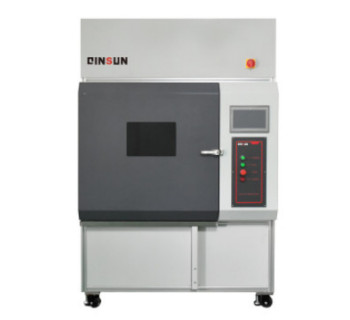


The development trend of xenon lamp ageing testers in the textile industry is as follows


Increasingly high degree of standardization

With the development of textile technology and the improvement of industry requirements, the degree of standardization of xenon lamp aging tester is getting higher and higher. Many international standards and industry standards have put forward requirements and methods for xenon lamp ageing testing of textiles, making the testing of light resistance of textiles more standardised and scientific.


Increased intelligence

The degree of intelligence of uv xenon ageing testers is also increasing, mainly in terms of automation, digitalisation and networking. For example, some xenon ageing testers can automatically adjust the intensity and time of exposure, automatically record test data and generate test reports, making test results more accurate and reliable.
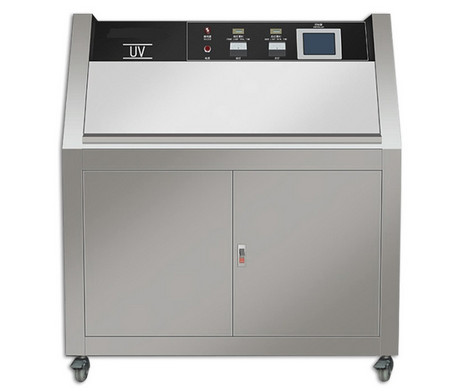


Versatility and specialisation

Xenon ageing testers in the textile industry are becoming more and more diverse and specialised. For example, some xenon ageing testers can test not only the lightfastness of fibres and fabrics, but also other colour fastness properties such as water resistance and rub resistance. In addition, there are also some specialised tests for special fibres, special fabrics and special colour fastness Xenon ageing testers.


In short, with the development of textile technology and the expansion of applications, xenon lamp aging tester in the textile industry and the development trend will continue to update and upgrade.

ps: (WLJCDM809)

评论

此博客中的热门博文

Tinuvin 1130: An Excellent UV Absorber

 In the field of the chemical industry, UV absorbers play a crucial role, particularly in protecting materials from UV damage. Today, we will delve into a highly regarded UV absorber—Tinuvin 1130. Tinuvin 1130 : chemical name: 3-(3-(2H-benzotriazole-2-yl)-4-hydroxy-5-tert-butyl phenyl)propionic acid polyethylene glycol 300 ester; CAS login number: 104810-48-2. This product is an exceptional UV absorber that offers numerous benefits due to its unique properties. One of the standout features of Tinuvin 1130 is its excellent weather resistance. It has a strong ability to absorb ultraviolet rays, particularly those with wavelengths ranging from 290-400nm. This effectively prevents coatings, plastics, rubber, and other materials from being damaged by UV rays, thereby maintaining the performance and appearance stability of these materials and extending their service life. In addition, Tinuvin 1130 exhibits good compatibility. It is easy to emulsify in water-based systems and can be...

Ink Abrasion Tester For Ink Layer Abrasion Test

        Abrasion resistance of ink layer is one important parameter that is used to evaluate the printing quality. If the abrasion resistance of the ink layer is poor, the printed words on the paper or paperboard may become illegible and the part with printed area may be abraded in transportation, storage or in use.                   As a result, the printed words will be not able to be read by the customers, which cause inconvenience or misunderstanding and thus the product image would be compromised. Therefore, it is necessary for the manufacturers to test the abrasion resistance of the ink layer on the paper or paperboard before use.         Often during the shipping or handling process, printed products will be exposed to a degree of abrasion to its surface. Regardless of quality or perfection of the printed product, a scuffed, rubbed off or scratched surface would render it a print defect...

Mechanism of action of benzonitrile

  Product identification: Product name:  Benzonitrile Molecular formula: C7H5N CAS No.100-47-0 Benzonitrile is a colorless oily liquid with an almond-like odor. It is slightly soluble in cold water, soluble in hot water, and easily soluble in organic solvents such as ethanol and ether. The mechanism of action of benzonitrile can be elaborated from the following aspects: I. Chemical Properties and Applications As an Intermediate in Organic Synthesis: Benzonitrile plays a crucial role in chemical synthesis as an intermediate for many important compounds and materials. For example, it can be used to synthesize advanced coatings such as phenyl melamine, as well as compounds such as pesticides, aliphatic amines, and benzoic acid. These compounds have a wide range of applications in agriculture, coatings, plastics, and other fields. As a Solvent: Benzonitrile possesses good solubilizing properties and can be used as a solvent. In organic synthesis, it is often used as a solvent to d...